Remote Work Heatwave and Power-Outage Meeting Fallback Plan for 2026
A practical home-office continuity plan for heat alerts, rolling outages, router backup, meeting fallback channels, battery limits, and employer-safe communication.

Updated 2026-06-26. This guide is designed for readers who need a calm, source-backed plan before a stressful event. It favors official guidance, practical handoffs, and privacy-aware documentation over panic buying or vague advice. Use it as a checklist, then confirm high-stakes decisions with the relevant professional, employer, provider, or agency.
Fast decision table
| Decision | Safer default | What to document | When to escalate |
|---|---|---|---|
| Immediate risk | Act on official alerts and direct evidence first | Time, source, owner, next step | Health, safety, money, account, or legal harm is possible |
| Private data | Share the minimum useful details | Where sensitive records are stored, not the secret itself | A helper needs access you cannot safely provide |
| Backup option | Test it before relying on it | Runtime, contact, route, or provider limit | The backup changes policy, safety, or cost exposure |
| Follow-up | Review within 24 hours of a real event | What worked, what failed, what changed | The same failure repeats or affects vulnerable people |
1. Define the work-critical hour before buying gear
A continuity plan begins with the hour you cannot miss: a client call, production handoff, payroll approval, classroom session, or support rotation. Name the meeting owner, acceptable fallback channel, file needed offline, and the threshold for switching locations. This prevents the common mistake of buying batteries while leaving the decision tree unclear.
A continuity plan begins with the hour you cannot miss: a client call, production handoff, payroll approval, classroom session, or support rotation. Name the meeting owner, acceptable fallback channel, file needed offline, and the threshold for switching locations. This prevents the common mistake of buying batteries while leaving the decision tree unclear. The useful version is specific: name the trigger, the owner, the backup, and the point where do-it-yourself action stops. Keep the tone boring and operational so another person can follow the plan while tired, busy, or worried.

2. Keep heat safety separate from productivity pressure
When indoor heat rises, the plan is not to keep typing at any cost. Use local heat advisories, employer policy, and household health needs to decide when to stop, move, or reschedule. Fans, cooling towels, water, blinds, and laptop power settings help only inside safe limits; they do not replace cooling centers, medical advice, or emergency response.
When indoor heat rises, the plan is not to keep typing at any cost. Use local heat advisories, employer policy, and household health needs to decide when to stop, move, or reschedule. Fans, cooling towels, water, blinds, and laptop power settings help only inside safe limits; they do not replace cooling centers, medical advice, or emergency response. The useful version is specific: name the trigger, the owner, the backup, and the point where do-it-yourself action stops. Keep the tone boring and operational so another person can follow the plan while tired, busy, or worried.
3. Make the router path boring and documented
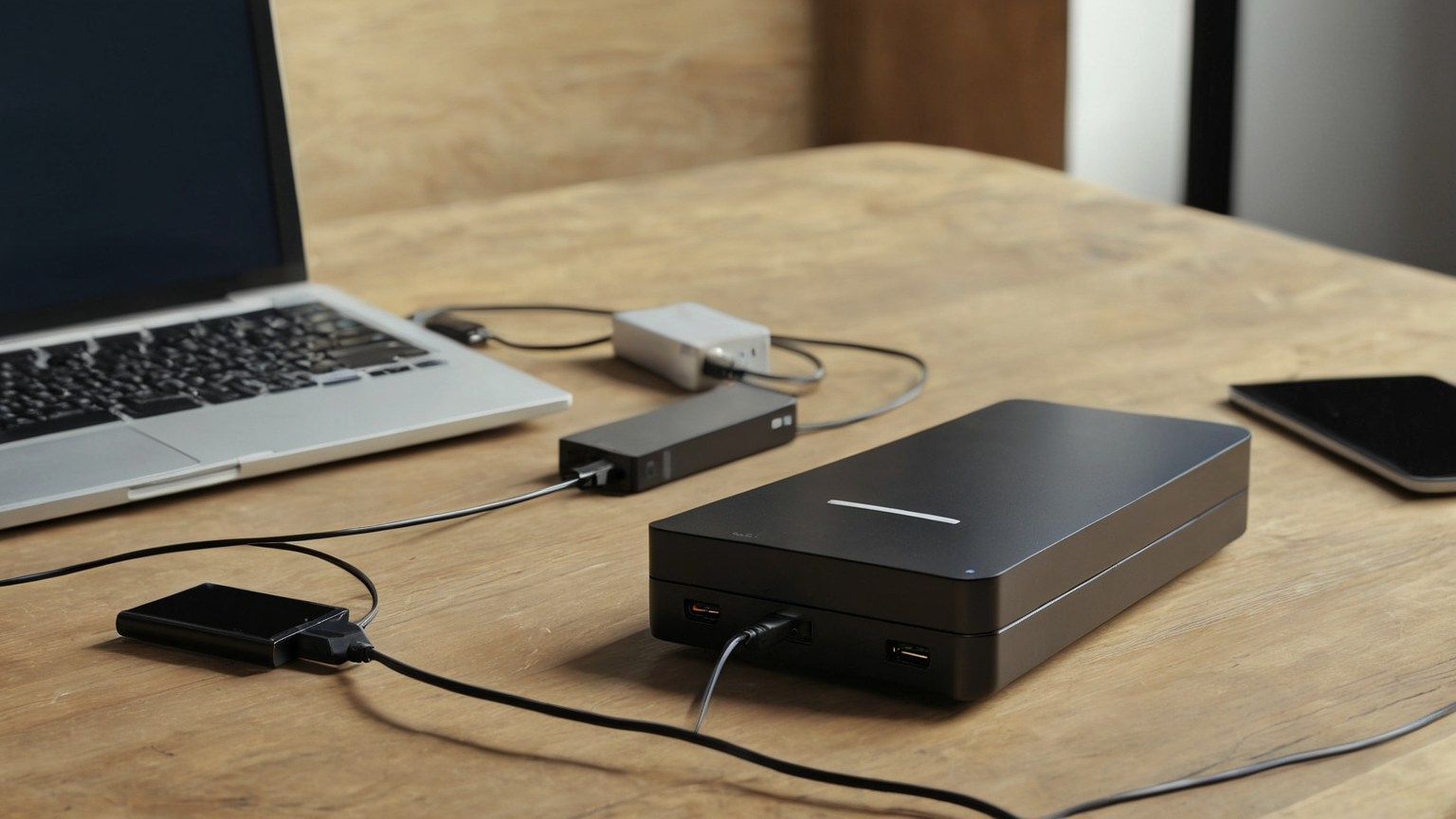
List modem, router, mesh nodes, power brick ratings, ISP outage page, mobile hotspot rules, and the one person who can approve hotspot use. Label cables and keep a short test log. A simple router backup that has been tested for thirty minutes is better than a large battery nobody knows how to connect.
List modem, router, mesh nodes, power brick ratings, ISP outage page, mobile hotspot rules, and the one person who can approve hotspot use. Label cables and keep a short test log. A simple router backup that has been tested for thirty minutes is better than a large battery nobody knows how to connect. The useful version is specific: name the trigger, the owner, the backup, and the point where do-it-yourself action stops. Keep the tone boring and operational so another person can follow the plan while tired, busy, or worried.

4. Prepare meeting fallbacks that respect company policy
Do not move confidential meetings to personal tools without approval. Instead, pre-write the fallback: dial-in number, company chat thread, recording rules, offline document, owner, and escalation path. If privacy or regulated information is involved, the fallback may be rescheduling, not a different app.
Do not move confidential meetings to personal tools without approval. Instead, pre-write the fallback: dial-in number, company chat thread, recording rules, offline document, owner, and escalation path. If privacy or regulated information is involved, the fallback may be rescheduling, not a different app. The useful version is specific: name the trigger, the owner, the backup, and the point where do-it-yourself action stops. Keep the tone boring and operational so another person can follow the plan while tired, busy, or worried.

5. Review after the first real outage
A plan improves only after a real event or drill. Record battery runtime, room temperature, connectivity, missed files, and what confused the team. Update the checklist within twenty-four hours while details are still fresh.
A plan improves only after a real event or drill. Record battery runtime, room temperature, connectivity, missed files, and what confused the team. Update the checklist within twenty-four hours while details are still fresh. The useful version is specific: name the trigger, the owner, the backup, and the point where do-it-yourself action stops. Keep the tone boring and operational so another person can follow the plan while tired, busy, or worried.

One-page checklist
- Confirm the current official or expert source before acting.
- Name the owner, deadline, backup route, and next review date.
- Keep passwords, account numbers, payment data, private medical details, serial numbers, and sensitive screenshots out of shared notes.
- Use a temporary workaround only if it does not create a larger safety, privacy, policy, or money risk.
- Capture receipts, confirmation numbers, photos of non-sensitive setup details, and dated notes where appropriate.
- Escalate to the relevant professional, provider, employer, agency, veterinarian, or emergency service when harm is possible.
Common mistakes and safer replacements
| Mistake | Why it weakens the plan | Better habit |
|---|---|---|
| Copying a generic checklist | It may miss the actual trigger, policy, climate, account, or household constraint | Rewrite the checklist around your next likely incident |
| Storing every detail in one visible place | The helper gets convenience, but a thief gets the same convenience | Separate process notes from sensitive secrets |
| Waiting until the emergency | Untested gear, stale contacts, and missing records fail under pressure | Run a short drill while conditions are normal |
| Treating cost as the only metric | Cheap workarounds can create safety, fraud, privacy, or compliance costs | Compare total risk and recovery time |
FAQ
Does this replace professional advice?
No. Use this guide to prepare a clean handoff and better questions. For medical, veterinary, legal, financial, security, workplace, or emergency issues, follow the qualified professional or official source.
What should never go in a shared checklist?
Avoid passwords, seed phrases, backup codes, full account numbers, payment-card images, private medical details, unnecessary IDs, confidential work data, and screenshots that reveal security settings.
How do I know the plan is current?
A plan is current only if the links, contacts, devices, routes, and recovery steps still work. Review after a real event and after any account, phone, address, caregiver, employer, or provider change.
Why include so many sources?
Multiple official or expert sources reduce thin content risk and help readers distinguish stable principles from details that may change by region, provider, or season.
Seasonal review drill
Run a fifteen-minute review before the season that makes this topic most likely. Open the official links, confirm the contact route, inspect the physical supplies or account settings, and write one dated note about what changed. The purpose is not to create paperwork for its own sake. The purpose is to make the first hour of a disruption slower, clearer, and less dependent on memory.
A useful drill has three parts. First, check whether the trigger is still realistic for your household, workplace, account, pet, or cash-flow routine. Second, test one small part of the backup path instead of assuming it works. Third, remove stale details that could mislead a helper. Old phone numbers, abandoned email accounts, expired supplies, unsupported devices, and closed financial products are common failure points.
Keep the review calm and non-promotional. Do not buy new tools unless the review shows a real gap. Do not copy private identifiers into a shared document. Do not turn a safety checklist into a guarantee. The best outcome is a short plan that a tired person can use, with clear boundaries for when to stop and call the appropriate professional, provider, agency, employer, or emergency service.